Amande Haeghen, Ceramics and molten glass


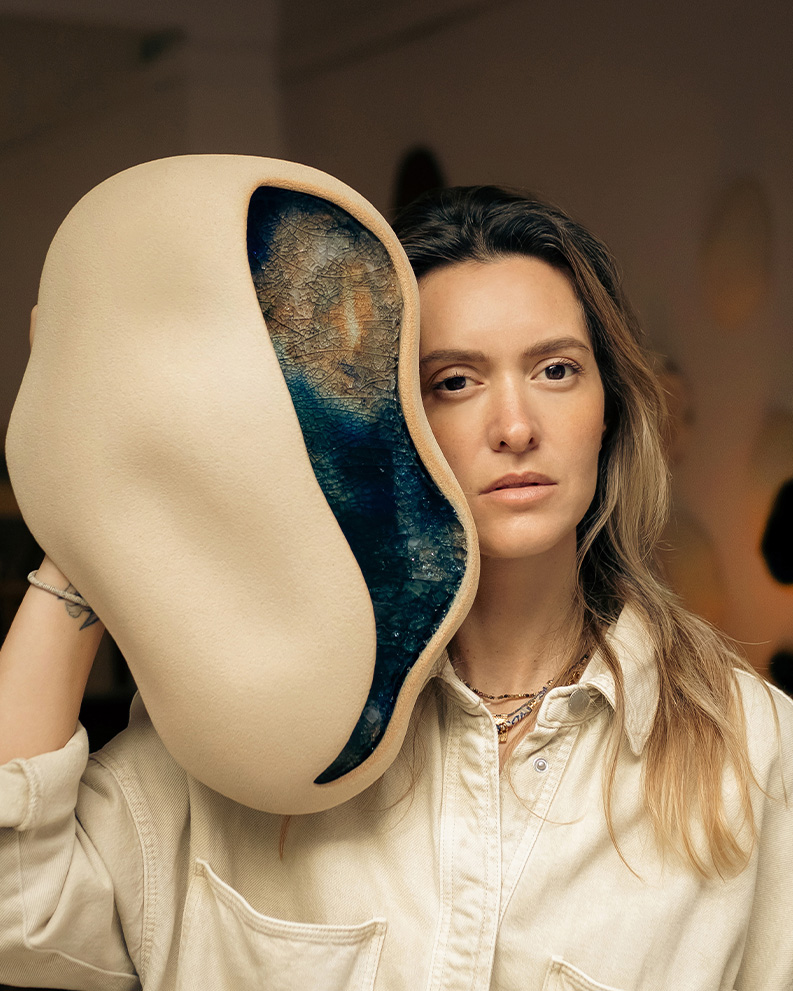
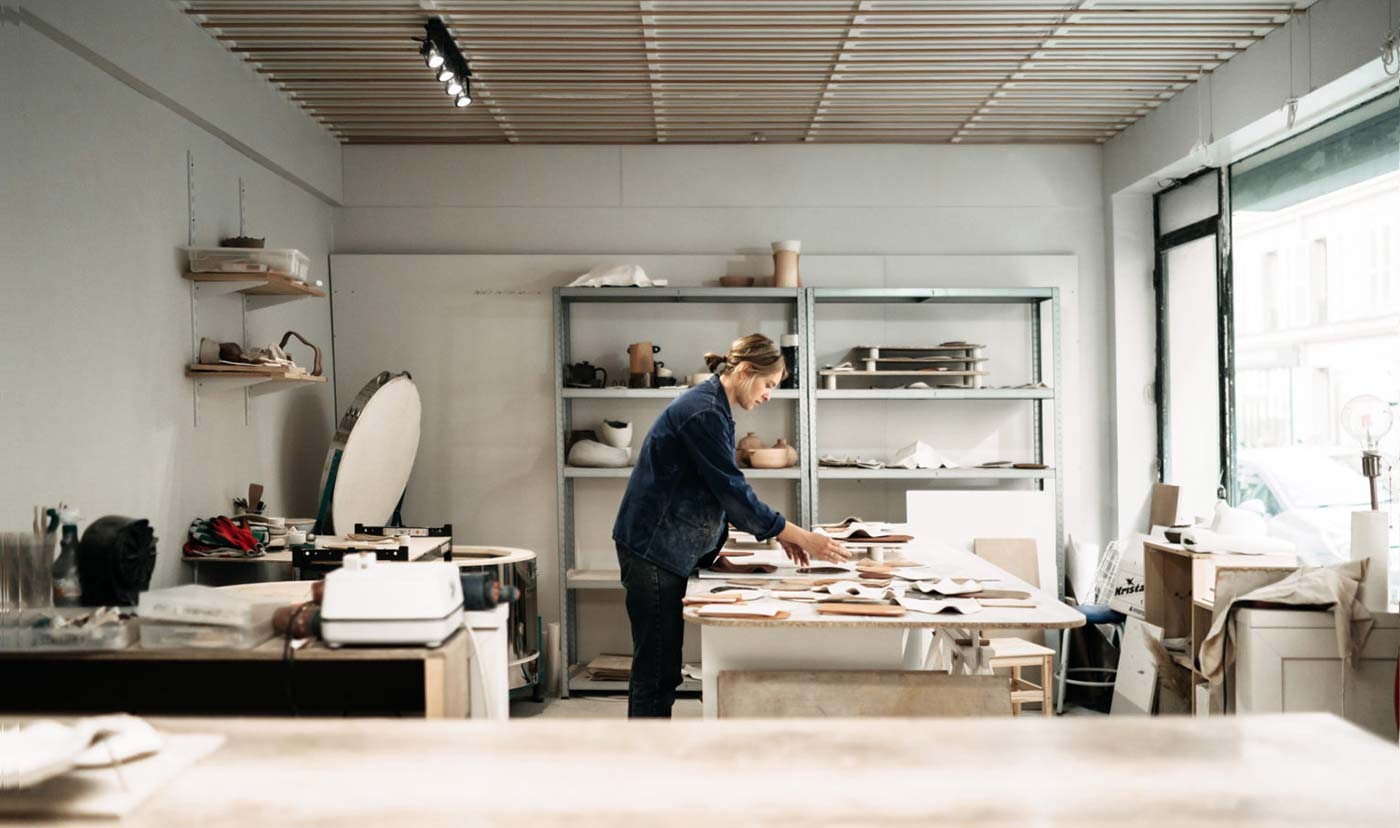
Working with ceramics and molten glass, French artist Amande Haeghen draws inspiration from nature and personal memories to create her sculptures and lighting. In her Lisbon studio, she experiments with materials and techniques, exploring how fire and light can transform her work in unexpected ways.
When Amande Haeghen opens her kiln, she never knows quite what to expect. The glass may have changed colour, developed bubbles or flowed across the surface in ways she hadn't anticipated. « It's either Halloween or Christmas, » she jokes. Some pieces may be discarded, while others turn out even better than she had imagined. Despite years of experience, this element of surprise remains one of the things she loves most about her work.
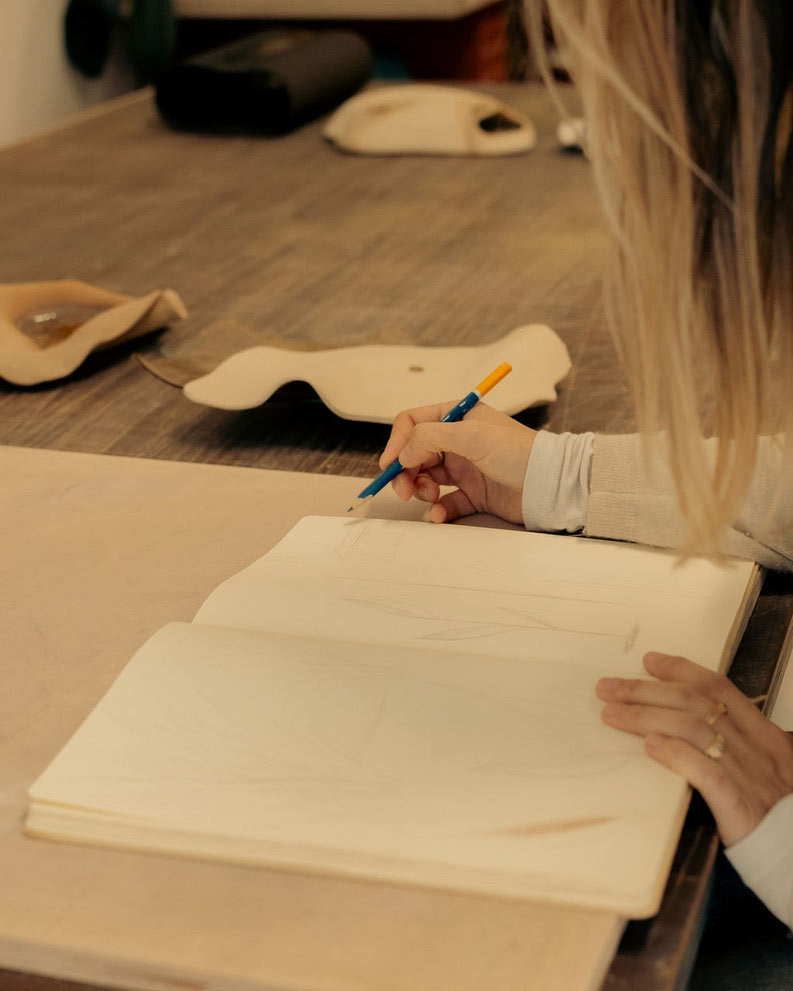
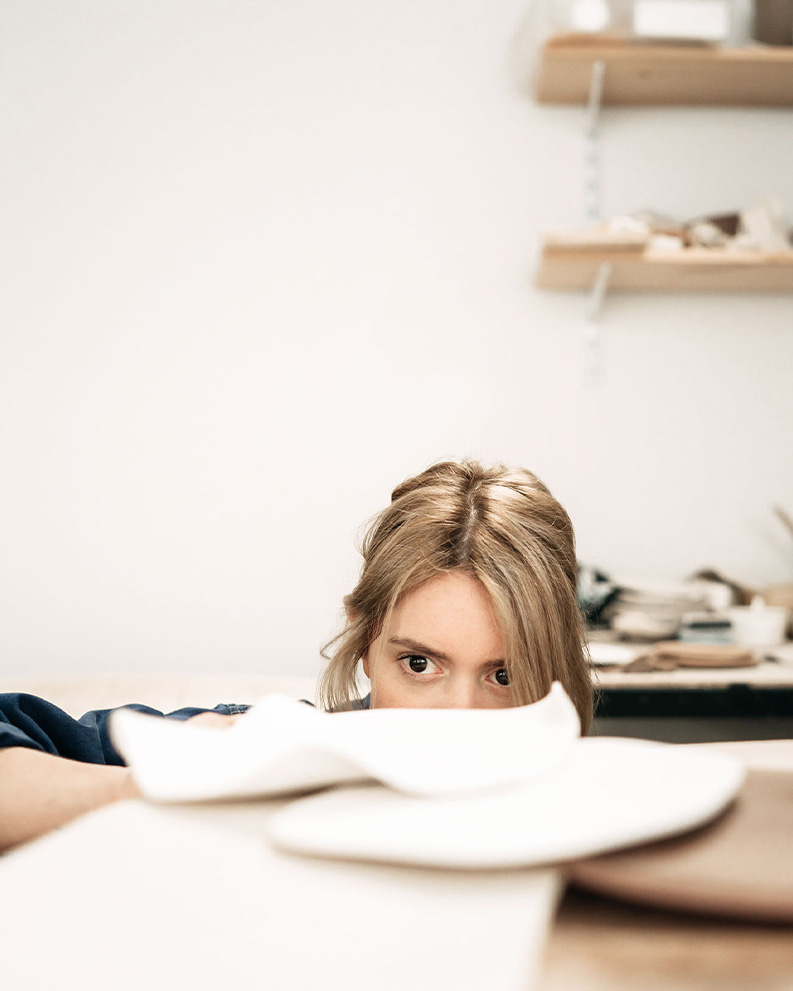
For almost a decade, Amande Haeghen has shaped clay by hand, refining its thickness, adjusting its contours and experimenting with different textures. Working with three-dimensional forms comes instinctively to Haeghen, although her career did not begin in ceramics.
Amande grew up in a family where creativity was part of everyday life. Her grandfather was a painter, as is her mother. As a child, she spent hours watching her mother work in her studio. Yet after studying fine art and art history, she chose a career in audiovisual production.
For several years she worked with emerging directors, producing commercials and music videos and helping them develop their ideas and creative identities. The birth of her first child marked a turning point. She decided to devote more time to her personal projects, and it was then that she discovered ceramics.

At a shared studio in Saint-Denis, just outside Paris, she taught herself ceramics, learning throug books, experimentation and trial and error. A few years later, she opened her own studio in Paris, where she began creating her first wall sculptures and lighting pieces. A commission for a restaurant gave her the opportunity to see her work installed in a setting beyond her studio.
« I was just starting out, and Chiara was one of the very first people to believe in my work. »

Much of Amande Haeghen’s inspiration comes from the natural world. The Bay of Arcachon, where she spent part of her childhood, holds particular meaning for her. Haeghen mentions in particular her walks on the Dune du Pilat and watching the tides constantly reshape the coastline. She is a keen observer and often photographs the smallest details of her surroundings: the surface of a rock, the texture of moss or the patterns left by wind in the sand.
« I think my work often begins when an image and a feeling come together. »
Amande never sets out to reproduce a landscape exactly as she sees it. Instead, her memories and impressions gradually turn it into something new, sometimes quite different from the original inspiration, an abstract curve, texture or colour. In her Mãe collection Mãe meaning mother in Portuguese the shapes of dunes and lagoons merge with the curves of the female body.. Her interest in glass began almost by accident, during a visit to her clay supplier.
She came across sheets of glass in different colours and textures and bought a few pieces to combine with her ceramic and porcelain work. She kept the leftover fragments, which gradually accumulated in boxes in her studio, without knowing what to do with them.


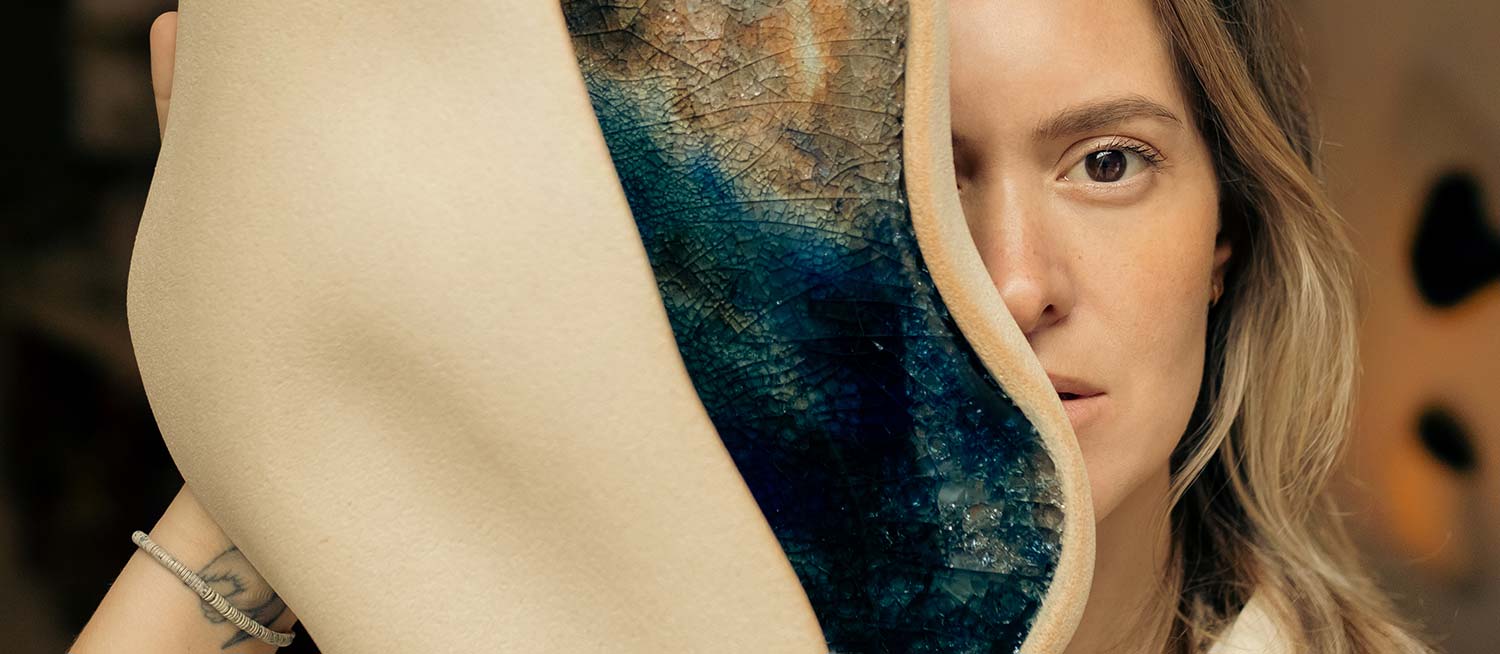
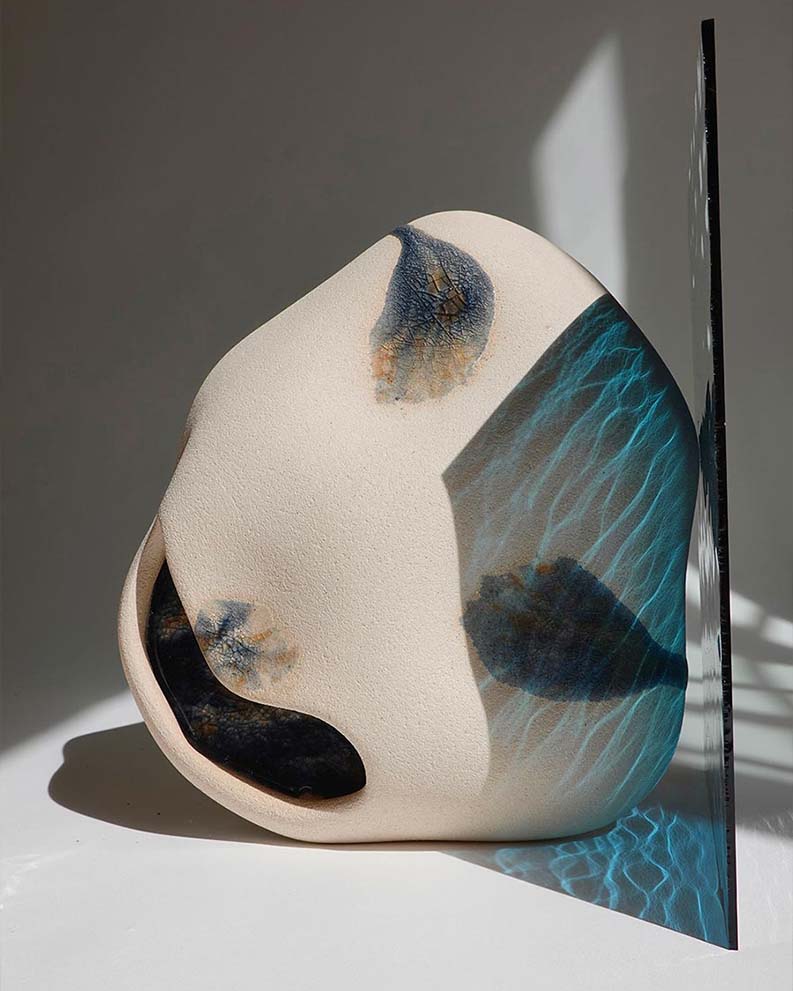
In 2020, she started melting these fragments directly onto her ceramic pieces. It opened up a whole new field of experimentation, combining colours, exploring the reactions between materials and testing different firing techniques. Depending on the clay, the temperature and the combination of colours, the glass might become transparent, crystallise or flow across the surface.
Some experiments require considerable patience. It took her nearly two years to achieve the colours she wanted on black clay. Other discoveries happen entirely by chance, such as the bubbles that appeared during one firing and inspired her to explore a new texture. While she now has a good understanding of how ceramics behave in the kiln, glass remains much less predictable.
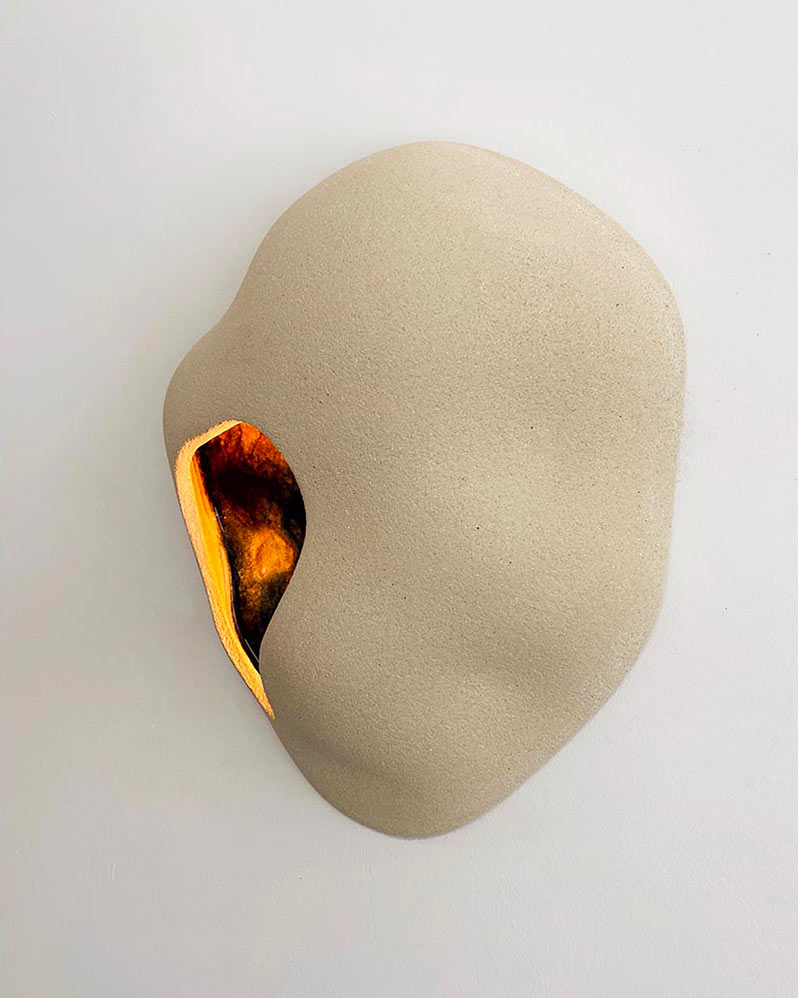
Combining the two materials becomes particularly interesting when she introduces light. Haeghen has been making lighting since the beginning of her career, but she doesn't approach a lamp as a sculpture to which a light source is simply added. From the earliest stages of a design, she thinks about how light will pass through the glass, how bright it should be and the shadows it will cast on the walls.
« More recently, I've started treating glass almost like paint, using the molten material to create movement and draw across the surface. »

Amande has lived in Lisbon since 2021. In Portugal, she has rediscovered the wide Atlantic beaches she remembers from her childhood, while the ochre earth, cliffs and vegetation have introduced new colours into her work. She also enjoys the slower pace of life, which gives her more time to observe her surroundings and experiment in the studio.
It was in Lisbon that she established The House of Haeg, a studio designed not only as a place to work but also as somewhere artists could meet and share ideas. A photographer spent two years there as an artist in residence, while others might come to make their own pieces or use the kilns.

Travel continues to influence Haeghen’s work. During a trip to Iceland, she discovered landscapes that were very different from the dark, almost monochrome scenery she had expected.
The bright green mountains, turquoise glaciers and black volcanic beaches encouraged her to experiment with stronger contrasts, moving away from the softer, more subtle colour combinations she had previously favoured.
On one beach, she noticed the patterns formed by frozen water on black sand, with their pale outlines and translucent surfaces. To her surprise, they reminded her of textures she had already produced in her kilns. She had found something in nature that looked remarkably similar to forms she had created without ever having seen them in a landscape. The trip inspired several new works, including a large wall piece made up of twenty-four individual elements, measuring 2.4 by 1.5 metres. Both its scale and its use of colour represented a new direction for her.
Working on a larger scale has opened up new possibilities. Amande has become increasingly interested in how her work relates to architecture: how a sculpture appears from across a room and how, on closer inspection, the texture of the clay and the subtle variations in the glass become visible She now dreams of creating a panel measuring three by two metres, like a monumental painting made from ceramics and molten glass, but it would require working with elements larger than her current kilns can accommodate. She is curious about other materials too, particularly wood, which she would love to learn to carve and combine with ceramics.
What matters most to Amande is allowing people the freedom to experience her work in their own way.
« I don't necessarily want people to feel one particular emotion. I'd rather make pieces that encourage them to take their time, look more closely and discover something for themselves. »
Shop The Look